Cotton weaving (tbanh ambas)
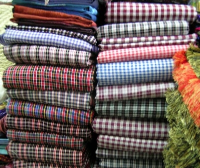
Cambodia’s long dry season makes it suitable for cotton cultivation. By the beginning of the 20th century, Cambodia was the most important producer of cotton in mainland South East Asia. Over the next 50 years, however, cotton began to be replaced with more profitable tobacco and
kapok, and local cotton had to compete with supplies from the USA, France and Japan.
Today the yarn is imported but traditionally woven cotton remains popular. Women in rural areas produce lengths of homemade cotton used as garments and household utility items. Every Cambodian owns at least one krama, the traditional cotton check scarf used for multiple purposes. Kramas in rural life become headcloths, sarongs, towels, bathing garments and baby slings. They can be used for bundling items to carry and even for catching small fish.
While kramas have survived well, other cotton items, such as homemade blankets, are in danger of being completely wiped out by cheaper machine-made textiles. Only in recent years have these begun to appear again in city markets, spurred by the presence of NGOs providing commissions to experienced weavers.


