Historical background
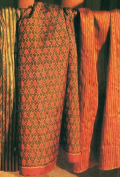
In the countryside prior to 1900, families produced lengths of woven cloth for use as clothing (
sampot) or scarfs (
krama). Pots, baskets and reed mats were made for daily use. Certain villagers were known as painters or sculptors who could be called from their rice fields when a
wat (temple) was being built or a festival required a particular kind of carving. The making of things was thus simply one of several activities that supplemented the primary task of tending the rice fields. Few families specialised in producing surplus goods beyond those required for their immediate family or for their village as a whole.
There were, of course, some exceptions. The silk weavers of Takeo province have been documented from as early as the Funan period (1st-6th centuries), and were renowned for the quality and intricacy of their ikat. Silversmithing was a recognised trade, and by the turn of the century some documents indicate that in urban centres such as Battambang and Phnom Penh, jewellers could make a full-time living from their work, albeit in limited numbers.
In the Royal Palace, meanwhile, the system of palace workshops from pre-colonial times was gradually formalised through the Royal Decrees of 1907 and 1912 and then finally taken over by the French administration, becoming the
École des arts Cambodgiens (School of Cambodian Arts) in January 1918. One of the primary objections voiced by Protectorate officials towards the existing Palace workshops was the fact that they did not produce surplus objects but rather worked exclusively to fulfil the commissions of the king. The
École instituted a system of training intricately linked to a system of sales, and thus shifted the acquisition of high-level artisan skills more firmly into the realm of commerce.
From the 1930s, some crafts declined, reflecting larger social changes. With the importation of cement and the development of moulds, for example, wats no longer required wood carvers and the local demand for such skills largely disappeared.
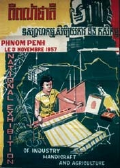
During the Sangkum Reastr Niyum period (1955-1970), objects recognised as traditional and Khmer (silk weavings, baskets, masks, silver jewellery) continued to be promoted and marketed.
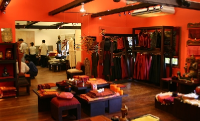
Since the coming of a wider peace in the early 1990s, a host of NGOs and international organisations have become involved in craft and artisanal training. Their efforts have focused on developing products, primarily sold to tourists, and training local populations to make them.
Artisans d'Angkor, a company that has grown out of the
Chantiers-Ecoles training institute in Siem Reap, is one of the most successful efforts, employing over 570 artisans in the production of art objects and luxury souvenir items and generating over US$3 million yearly in sales. A growing tourist market has also assisted the recovery of traditional crafts that were in danger of being completely replaced by factory-made clothing, utensils and other household items.


