Silversmithing
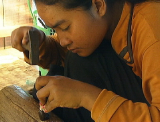
Silverwork dating back at least 500 years has been found in Cambodia, from the reign of King Ponhea Yat. Traditionally, silversmith’s workshops were supported by the Royal Palace, and there is still a concentration of silversmiths at Kompong Luong, near the former
Phnom Preah Reachtrop (Oudong), which was used from the 15th to the 19th centuries.
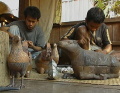
Silversmiths made weaponry, ceremonial objects and coins (the Khmer term for salary includes the word prak, silver). Silverware was used in funerary and religious rituals, as it is to the present day. Khmer silver boxes were used to store betel leaves and nuts.
During the French colonial era of the 19th and 20th centuries, the
ateliers of the School of Fine Art flourished, exhibiting their products abroad and taking commissions. By the late 1930s more than 600 silversmiths were employed, filling orders from as far away as Egypt and South America.
Popular silverwork today includes silver boxes, jewellery, small animals and other souvenir items. Traditional designs include fruit, flame and Angkor-inspired motifs.
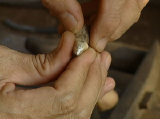
While many of the forms are produced by men, much of the delicate filigree work is created by women. Many objects use 90 per cent pure silver and the quality of workmanship is very high. The silver is still flattened with a handpress and the wire is also made by hand, not factory-produced.
The Cambodian royal family still owns the most ancient and elaborate silver collection in the country.


