Traditional crafts
by Yuko Kikuchi
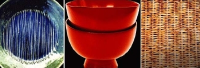
Japan has long been known throughout the world as a nation of craft. Yet the definition of craft up to the early 20th century in Japan is not as clear-cut as one would assume, due to the fact that art and visual culture developed independently from the post-Renaissance European model. Japanese art (fine art) and craft have often been synonymous, and in fact have overlapped, in pre-modern times and even more so in the contemporary period.
The popular understanding of Japanese crafts outlined here is based on the classification adopted from Europe in the late 19th century, which resulted in an institutional separation of ‘craft’ and ‘fine art’, comprising two-dimensional art work (painting, prints) and sculpture. However, this modern classification does not fit comfortably with Japanese visual culture, which had developed indigenously, and as a result the current definition of Japanese crafts is much more inclusive than its European counterpart.
Crafts are dominant in Japanese visual culture and include a wide range of objects which can be hand made in whole or in part, by industrial process or by studio artists. They can be religious or secular, functional or non-functional, and can hold a high or popular art status.
Use the navigation bar on the left to read this section.


