Cambodian literature today
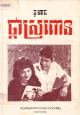
Most Cambodian writers cannot live on the proceeds of their writing. In recent years, well-known writers have turned their hand to writing for television and video, where the rewards are more certain. However some formal encouragement for novels and other creative writing does exist.
In 1993, the
Khmer Writers’ Association was re-established as an independent NGO by two of its former members. By 2002 the Association had a membership of almost 200, of which less than half were said to work full time as writers. The Association, under the leadership of You Bo, conducts training workshops for writers and runs literary competitions to encourage the submission of new manuscripts, through support from the Royal Palace (for the
Preah Sihanouk Prize) and the Prime Minister (for the
7 January Prize). Currently in abeyance due to lack of funds, these two competitions ran for five successive years, garnering over 100 entries each time in the early years.
Through training workshops over the past decade, the Khmer Writers Association has successfully nurtured the development of a new generation of creative writers, including novelists Ouch Vutha, Uom Niroth, Hou Yath and Nget Sophorn and poets Sok Sothon, Pol Pisey, Uk Sau Bol, Eum Sarom, Som Sophierin and Hy Kim Siep. Emerging writers since 1999 include Yem Samna, Wa Samart, Un Sok Hieng, Phu Yaat and Saim Phuneary.
No longer able to organise literary competitions due to lack of funds, the Khmer Writers' Association has in recent years shifted its focus of training to include courses on how to write screenplays, and a number of former trainees have gone on to work with the
Cambodian Television Network (CTN), the
BBC World Service Trust and others.
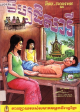
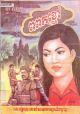
At present new writing receives exposure mainly through small-scale self-publishing efforts – generally print runs of one to two thousand copies, priced at 2,000-3,000 Riel each (50-75 US cents). Two recent verse-novels - Hy Kim Siep’s
Veasna Bopha Rungkruh (‘A Woman’s Misfortune’) and Saim Phuneary’s
Wopadek Sarey (‘Remorse’) - were both published in this way. Unfortunately newspapers no longer provide space for fiction-writing, although
Pracheaprey (Popular Magazine) has on occasion serialised work by leading writers.
Though more people are reading, the market is dominated by the pre-war classic novels, suggesting an ongoing nostalgia. At the time of writing, the vision of a classless society in Kolap Pailin (‘Rose of Pailin’) is being serialised on radio, while the literature curriculum at high school and university still emphasises socialist themes of class struggle.


