The emergence of modern and contemporary Cambodian literature
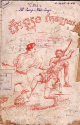
Between 1938 and 1972 over 1,000 novels were printed, ranging from detective and adventure tales to mysteries, historical novels and love stories. After independence, Cambodian literature was added to the national educational curriculum. With the establishment of the
Khmer Writers’ Association in 1956, writers were recognised as making a cultural contribution in their own right and the institutionalisation of Khmer literature appeared complete.
During the Khmer Rouge era () there was little literary activity. However, an interesting offshoot of creative writing at this time occurred in Khmer Rouge song lyrics, which were set to music using established musical forms from popular theatre and folk dances.
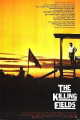
The suffering of this time has found creative expression in the novels and autobiographical works of Cambodian writers living overseas, most famously perhaps through Dith Pran’s memorable work
The Killing Fields, which was subsequently turned into a feature film.
During the PRK regime of the 1980s, the government placed a high value on literacy, and nationwide campaigns were held to ‘liberate’ the masses from illiteracy, while prizes were offered for novels, poems, songs and drama on officially approved themes of war and socialist reconstruction.
In this climate, novels as a means of escapism were in high demand. Some of Cambodia’s leading novelists, including Mao Samnang and Pal Vannirath, established their reputations without having their work published, but rather through distributing handwritten manuscripts and photocopies through market stalls. Pal Vannirath, a prize-winning revolutionary writer, wrote more than a dozen sentimental novels but was not able to openly publish them in book form.
From 1989, routine censorship ceased, and the government began a programme of privatising state-owned enterprises. Reading for entertainment began to be replaced by television and video, and novelists began to turn their hand to writing for film and video, a potentially more lucrative pursuit.
Khmer literature by Cambodian writers living in France and the USA also began to appear during the 1980s and 1990s. Many of these are survivors’ accounts which have begun to provide insight into the experiences of those who lived through the Khmer Rouge regime, and provide some depth of social realism.
During this period, Cambodian communities abroad set up organisations to preserve and foster Cambodian culture: these include the Khmer Studies Institute in Connecticut, the Cambodia Foundation in Texas, and the
Centre de documentation et de recherche sur la civilisation Khmere (CEDORECK) in Paris. Some of their journals have serialised novels by refugees, and CEDORECK also reissued the pre-war classic novels
Sophat, Kolap Pailin, Phka Srophoun and
Melea Duong Chet.
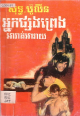
Individual writers such as Biv Chhay Lieng and Soth Polin also re-issued some of their old works while living abroad. New writing appeared by Pech Sanwawann, a 1960s novelist resident in France, and by younger writers such Chuth Khay, writing since the 1970s, and Duong Ratha, a US resident. Survivor accounts in English and French began to gain an international profile.
Back in Cambodia, the proliferation of privately-owned newspapers from the early 1990s had a big impact on Khmer literature. Many of the papers were shoestring operations that relied on serialised novels to fill space and boost readership – mainly love stories, ghost and crime thrillers.

Much writing took the form of sentimental or thinly-veiled pornography, but some also provided social comment, such as Aok Bunthoeun’s
Srey Bar Kramom (‘The Virgin Bar-Girl’), serialised from 1993 to 1994 in response to the social changes brought by the presence of UNTAC troops. Ouput was high; one of
Rasmei Kampuchea (Light of Kampuchea) Daily’s regular novelists, Say Khun, had six novels serialised between 1993 and 1994.
During this period, the
Buddhist Institute was re-established in 1992 at Wat Ounalom in Phnom Penh, later moving into a purpose-built centre near the Bassac River.


